
The Short Version
Rocking Star Ranch HOA has made it clear that it does not intend to help organize or even formally notify the neighborhood about the proposed Horse Creek power plant. At the 2026 annual meeting, the Board repeatedly rejected requests to send an email, share project information, or take any position at all. Because of that, residents are now reaching out to neighboring HOAs directly to build the awareness and cooperation we hoped our own HOA would provide.
Why It Matters
Most homeowners still will not know this project exists unless someone tells them. That matters because the best chance we have to influence Black Hills Energy—whether that means stopping the project, moving it farther from homes, or demanding meaningful protections for water, noise, lighting, roads and property values—is to have an informed and organized community before major decisions are locked in.
Our HOA already has a management company, an attorney, established communication channels and direct access to nearly every homeowner in the neighborhood. We are not asking the volunteer Board to become engineers, attorneys or activists. We are asking them to do the simplest thing an HOA can do when something this significant is happening next door: tell the people they represent.
What We Know So Far
At the 2026 annual meeting, the HOA President repeatedly stated that the Board would not get involved with the Horse Creek project.
The Board refused requests to send even a neutral informational email to homeowners.
The Board also rejected sharing the Horse Creek Project website or other project information through HOA communication channels.
Board members argued that some homeowners may actually want the power plant and that the volunteer Board was being asked to take on too much.
Residents were not asking the Board to personally fight Black Hills Energy—we were asking it to help make sure homeowners knew what was happening.
Roughly 50 people attended the meeting, and residents repeatedly expressed frustration and disappointment with the Board's refusal to communicate.
The HOA has professional resources available, including a management company and legal counsel, that could help it understand its options without placing the entire burden on volunteer board members.
Because Rocking Star Ranch HOA will not lead the effort, residents are beginning to contact other nearby HOAs directly to ask them to notify their members, contact elected officials and news organizations, and consider working together.
What We Still Need to Know
Which nearby HOAs are willing to notify their homeowners and participate?
Will other neighborhoods help contact Black Hills Energy, elected officials, regulators and local media?
Could several HOAs share the cost of attorneys, hydrogeologists, appraisers, noise experts or other independent professionals?
Will the Rocking Star Ranch Board reconsider its position if enough homeowners ask?
Will residents need to use their rights under Wyoming nonprofit law to force a formal membership meeting on the issue?
Most importantly: how many homeowners would want their HOA involved if they were simply given the opportunity to know what is happening and decide for themselves?
Our Position: The HOA Should Be Leading This Response
This is exactly the kind of issue an HOA should help its members face together.
Rocking Star Ranch’s own documents identify protecting property values, maintaining roads and open space, and preserving attractive surroundings free from nuisance, undue noise and danger as important purposes of the Association.
The HOA does not have to oppose the power plant to inform its members.
At an absolute minimum, every homeowner should know that a major industrial project is being planned next to the neighborhood and have the opportunity to decide for themselves whether they are concerned.
The HOA has real financial interests at stake.
Rocking Star Ranch—not the County—is responsible for maintaining and improving its interior roads. If years of construction or increased traffic damage those roads, homeowners may ultimately be paying the bill.
The HOA represents interests one homeowner cannot represent alone.
It manages hundreds of acres of common open space specifically preserved for wildlife habitat, visual values, drainage and the natural environment.
There is strength in numbers.
One homeowner hiring attorneys, hydrogeologists, appraisers and engineers is unrealistic. An HOA can organize hundreds of homeowners—and work with neighboring HOAs—to share those costs, speak with one voice and demand credible answers.
The HOA already has the ability to hire professional help.
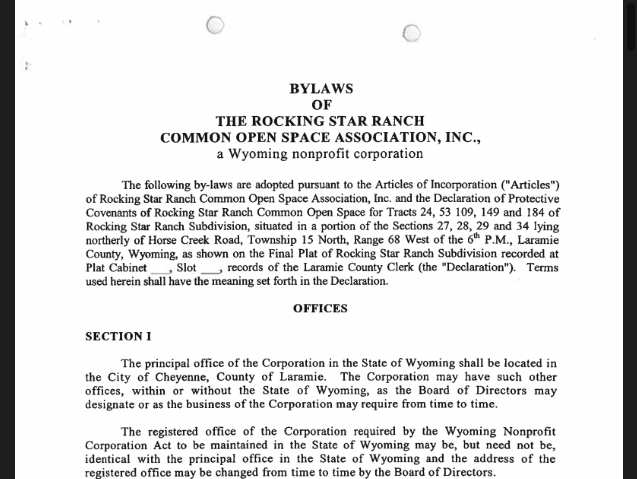
Its bylaws allow the Board to engage independent contractors, meaning attorneys, engineers and other experts are not outside the normal tools available to the Association.
Homeowners do not have to accept silence from the Board.
Wyoming law says members holding at least 5% of the voting power can demand a special membership meeting, and the meeting notice must tell members what the meeting is about. If proper notice is not issued within 30 days, the statute provides additional remedies.
The HOA and affected homeowners may be stronger together than either would be alone.
The HOA can potentially represent common property, roads and collective member interests, while individual homeowners can document specific impacts to their wells, homes, views and property. That combination could matter in future regulatory proceedings.
Waiting until construction begins is waiting too long.
Wells, roads, home values, sound levels, views and other existing conditions can be documented now, while attorneys and experts can help identify permits, deadlines and alternatives before major decisions become harder to change. Our HOA should be helping organize that work—not leaving individual homeowners to figure it out alone.
Communications & Correspondence


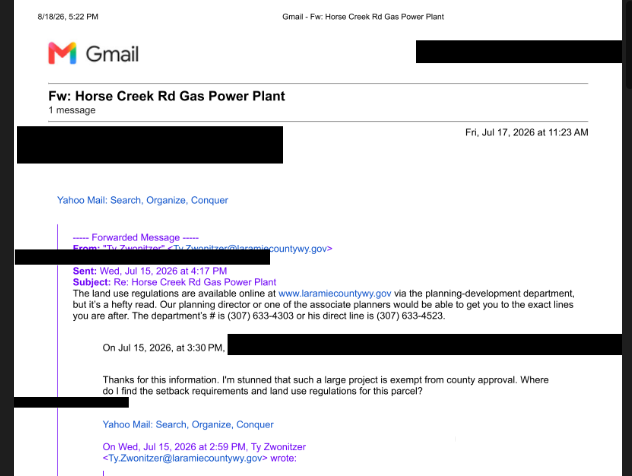
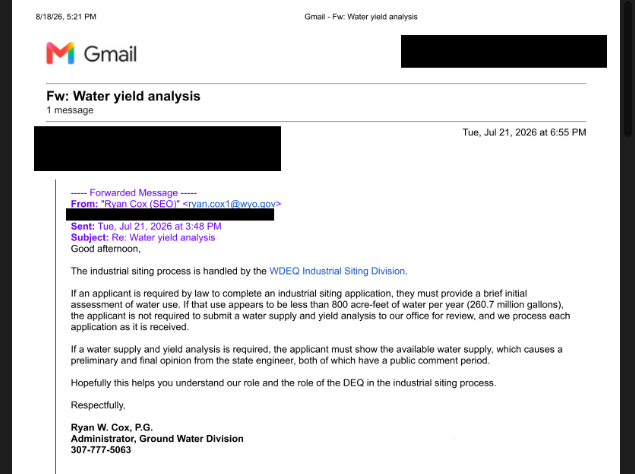

HOA & Neighborhood Records


Key Documents
HOA Correspondence on Horse Creek Project and Member Communications — Documents the board and management positions at that time.
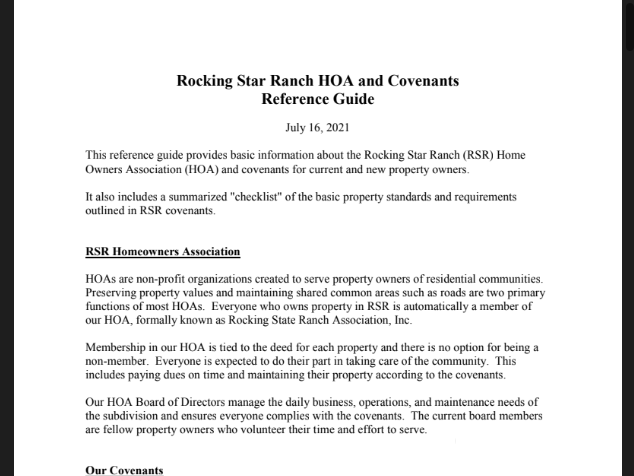
Rocking Star Ranch HOA & Covenants Reference Guide — Summarizes the HOA’s stated purposes.
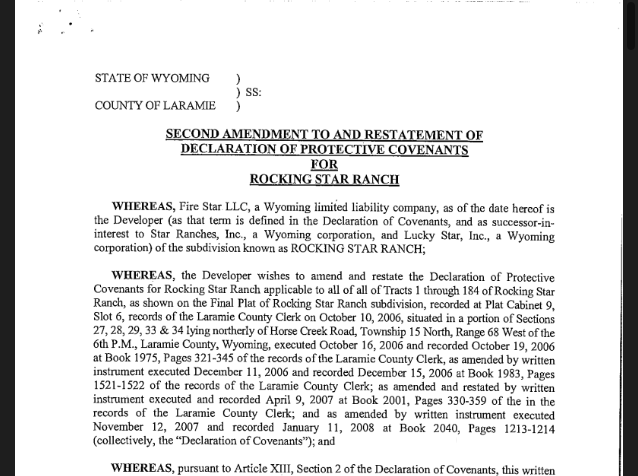
Recorded Protective Covenants — Rocking Star Ranch — Provides the controlling language and scope.
Rocking Star Ranch Association By-Laws — Explains how the Association and board operate.